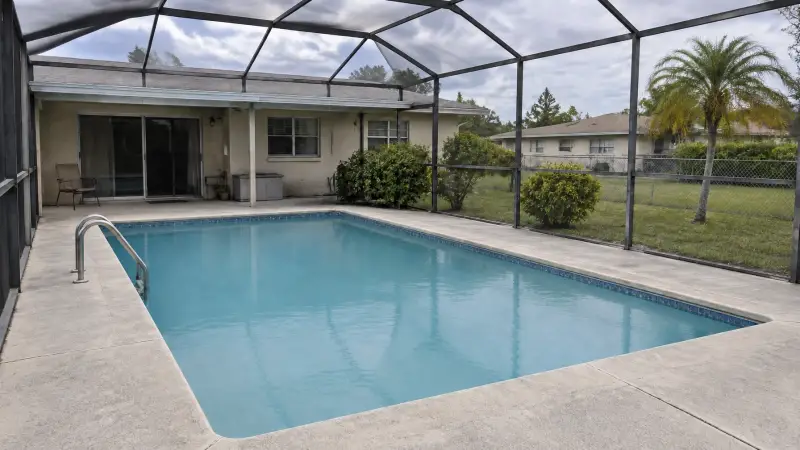

I hear a lot of confusion about salt water pools, especially from homeowners who assume the system takes care of everything automatically. It does not.
A salt water pool can be easier to manage in some ways, but it still needs regular cleaning, testing, chemical balancing, and salt system servicing. In Polk County, Florida, our heat, heavy rain, hard water, and strong sunlight can push pool chemistry out of balance faster than many homeowners expect.
I want to walk through how these systems actually work, what to watch for, and when guessing can create a bigger problem.
What a Salt Water Pool System Actually Does
A salt water system does not make your pool chlorine-free. It makes chlorine.
The system uses a chlorine generator, also called a salt cell, to convert dissolved salt into chlorine as water passes through the cell. That chlorine sanitizes the pool by helping control bacteria, algae, and other contaminants. After doing its job, the chlorine eventually changes back into salt, and the process continues as long as the system is operating properly.
The salt level is much lower than seawater, so a properly maintained salt pool should not taste or feel like the ocean. The important thing is keeping the salt concentration within the range recommended for your specific chlorine generator.
Most systems operate somewhere around 2,800 to 3,400 parts per million (ppm), with many manufacturers targeting approximately 3,000 to 3,500 ppm. The exact range depends on the equipment, so the owner's manual should always be your final reference.
Ideal Salt Levels in a Florida Pool
Salt does not evaporate with water. That means ordinary evaporation can actually cause the salt concentration to rise slightly as water leaves the pool.
However, Polk County weather creates several situations that can lower the salt level:
- Heavy rain adds fresh water to the pool.
- Overflow from storms can carry salt out of the pool.
- Splash-out lowers the water level and removes salt.
- Backwashing a sand filter removes salty water.
- Leaks and water replacement dilute the remaining salt.
- Frequent topping off with a hose adds water without adding salt.
Florida's summer storms can change the water level quickly. If a large amount of water leaves through the overflow or the pool is partially drained, the salt level may be lower afterward even if the water still looks clear.
This is why I do not recommend adding salt just because the control panel says the level is low. First, test the water with a reliable salt test or have the reading confirmed. Adding salt without testing can create a high-salt condition that may require draining and replacing water.
pH Drift Is Usually the Biggest Salt Pool Issue
In my experience, pH drift causes more frustration for Polk County salt pool owners than the salt level itself.
Salt chlorine generators naturally tend to push pH upward during operation. Florida's hard water can make that issue more noticeable, especially when calcium levels are already elevated. As pH rises, chlorine becomes less effective and calcium scale becomes more likely.
A practical pH target for many salt water pools is 7.2 to 7.6. Some pools are managed closer to 7.4 to 7.6, depending on the total alkalinity, calcium hardness, surface type, and equipment manufacturer's recommendations.
The key is not waiting until the pH is extremely high. Small, regular adjustments are usually easier to manage than allowing the water to drift for several weeks and trying to correct it all at once.
Total alkalinity also matters. A common operating range is approximately 80 to 120 ppm, although the best target depends on the pool and its chemistry. If alkalinity is too high, pH may rebound quickly after acid is added. That can create a cycle of high pH, more acid, and repeated scaling.
For more guidance, I recommend reviewing our pool water chemistry resources.
Why Stabilizer Matters So Much in Florida
Cyanuric acid, commonly called CYA or stabilizer, protects chlorine from being broken down by ultraviolet sunlight.
That matters everywhere, but it matters even more in Central Florida. We have intense sunlight for much of the year, and an outdoor pool can lose chlorine quickly when the stabilizer level is too low. If the chlorine generator has to work constantly to keep up, it may appear that the system is not producing enough chlorine when the real problem is inadequate protection from the sun.
Many salt pool owners aim for a CYA level around 60 to 80 ppm, but the correct target can vary by system and manufacturer. Too little stabilizer allows chlorine to disappear quickly. Too much can reduce chlorine's effectiveness and make the water more difficult to manage.
CYA does not usually change as quickly as pH, but heavy rain, overflow, draining, and refilling can lower it. I recommend checking it periodically and retesting after major storms or significant water replacement.
Heavy Rain Can Swing More Than Just the Salt Level
Florida rain affects pool chemistry in several ways.
First, it dilutes the salt and other chemicals when enough rain enters the pool or water leaves through the overflow. Second, storms bring leaves, dirt, pollen, and other organic material into the water. That extra contamination increases chlorine demand. Finally, rain can alter the water level and affect the balance between the pool's existing water and the fresh water added afterward.
After a major storm, I recommend checking:
- Salt level
- Free chlorine
- pH
- Total alkalinity
- CYA
- Water level
- Filter pressure
- Skimmer and pump baskets
Do not immediately assume the salt cell has failed because the chlorine level is low after a storm. The pool may simply need debris removal, chemical balancing, longer circulation, or a confirmed salt adjustment.
Our weekly pool care guidance covers several of the routine steps that help prevent small weather-related problems from becoming expensive cleanups.
Salt Cell Scaling: What It Looks Like and Why It Happens
The salt cell contains plates that generate chlorine. In Florida, calcium scale can build up on those plates because of high pH, hard water, elevated calcium hardness, or a combination of those conditions.
Look for:
- White or gray crust on the cell plates
- Flakes appearing in the pool
- A low chlorine reading even though the system is running
- A “check cell” or similar warning
- Reduced water flow through the cell
- Repeated high-pH problems
Scale can interfere with the cell's ability to produce chlorine. It can also make homeowners think the cell is dead when it may simply need inspection and cleaning.
I usually recommend inspecting the cell approximately every three months, or more often if your pool develops scale quickly. Some pools need attention sooner, while others can go longer. The water chemistry and the manufacturer's instructions should determine the schedule.
How to Clean a Salt Cell Carefully
Before cleaning the cell, turn off power to the pool equipment and follow the instructions for your specific model. If you are not comfortable removing or inspecting the cell, it is better to request an equipment evaluation than to force a connection or damage the housing.
The general process is:
- Turn off the pool pump and power to the salt system.
- Remove the cell according to the manufacturer's instructions.
- Inspect the plates for scale, cracks, or other visible concerns.
- Rinse the cell with a garden hose first. Loose scale may come off without chemicals.
- If scale remains, use only the manufacturer-approved cleaning method and solution.
- Do not scrape the plates with a screwdriver, knife, wire brush, or other metal tool.
- Rinse the cell thoroughly before reinstalling it.
- Restore power and confirm that water is circulating normally.
Acid cleaning should not be treated as routine maintenance if there is no scale. Too much acid cleaning can shorten the life of the cell. If you see heavy buildup, damage, or a warning that remains after cleaning, have the system evaluated instead of repeatedly soaking the cell.
You can learn more about equipment inspections through our pool equipment resources and our pool services page.
Salt Pools Still Need Weekly Cleaning
The salt system only helps produce chlorine. It does not skim leaves, brush the walls, empty baskets, remove dirt from the floor, or clean the tile line.
Weekly maintenance should include:
- Skimming the surface
- Brushing walls, steps, and benches
- Vacuuming the pool
- Emptying skimmer and pump baskets
- Checking water level
- Testing and balancing the water
- Inspecting the filter pressure
- Confirming the salt system is operating
- Looking for early signs of algae or scale
A clean pool also makes chemical balancing easier. Leaves, pollen, and organic debris consume chlorine. If they remain in the pool, the generator has to work harder to maintain the same sanitizer level.
That is why a salt system should be part of a complete maintenance routine, not a replacement for one.
Common Salt Pool Owner Mistakes
The most common mistakes I see are avoidable:
Adding salt without testing. A low reading on the panel should be confirmed before adding more salt. Sensor readings can be affected by water temperature, circulation, and other conditions.
Ignoring rising pH. Clear water does not always mean balanced water. High pH can reduce chlorine effectiveness and encourage scaling.
Never inspecting the salt cell. The cell is one of the most important parts of the system. It should not be ignored until the pool turns green.
Assuming the cell is dead. A scaled cell may need cleaning or an evaluation before anyone can say the cell itself has failed.
Forgetting about CYA. Strong Florida sunlight can consume unprotected chlorine quickly.
Skipping weekly service because the water looks good. Problems often develop before they become visible. Consistent cleaning and testing help catch them early.
When to Request a Professional Equipment Evaluation
It is time to stop guessing and schedule an equipment evaluation when:
- The salt reading does not match reliable test results.
- The system repeatedly displays a low-salt or check-cell warning.
- The chlorine level remains low after proper balancing.
- The cell has heavy scale or visible damage.
- The pump is not maintaining normal circulation.
- The water flow through the system seems weak.
- The pool keeps turning cloudy or green despite regular chemical additions.
- You are unsure whether the problem is chemistry, circulation, or the salt system.
An honest evaluation should explain what is happening in plain language and separate what needs attention now from what can wait. That is how I approach service: look at the pool as a whole before recommending anything.
We provide salt system servicing, chemical balancing, and routine pool care throughout Polk County, including Lakeland and Winter Haven.
The Takeaway
Salt water pool maintenance in Florida is mostly about consistency. Keep the salt level within the manufacturer's range, watch pH closely, maintain the proper stabilizer level, inspect the salt cell, and continue weekly cleaning even when the pool looks clear.
Heavy rain, hard water, sunlight, and heat all put extra pressure on a salt system in Polk County. Regular testing and chemical balancing are usually much less stressful than trying to correct several problems at once.
A salt system can be a reliable part of your pool care routine, but it still needs attention. When the readings do not make sense or the equipment is giving repeated warnings, request an equipment evaluation instead of adding chemicals and hoping for the best.